

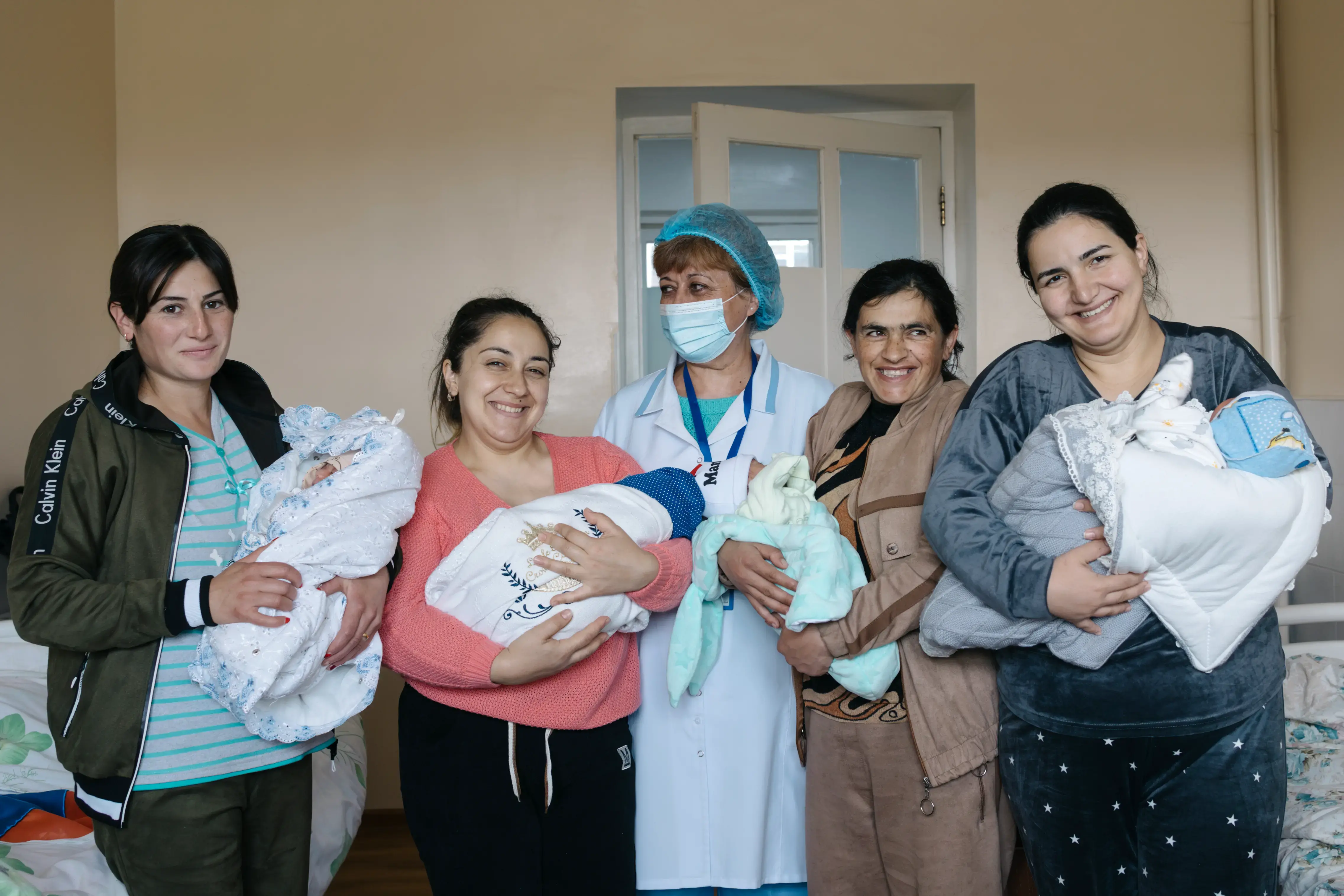

Across the Eastern Europe and Central Asia region, the degree of maternal health varies greatly, both between and within countries. UNFPA concentrates support for maternal health mainly to Central Asia, as well as selected Eastern European countries, where the need is greatest. Substantial progress has been achieved in the region to reduce maternal mortality by thirty-five per cent over the past two decades; achieve almost universal access to antenatal care; significantly increase the number of births attended by skilled personnel; and reduce the adolescent birth rate. These achievements have significantly contributed to progress toward the attainment of UN Millennium Development Goal 5: to improve maternal health. Most countries, except a few countries mostly in Central Asia, are on track to reach MDG 5, by achieving a reduction of maternal mortality ratios and universal access to reproductive health.
Despite these positive signs, data from the region conceal significant disparities within countries and shows greater maternal health risks exist among particular groups in the community such as Roma population and adolescent girls in child marriages. Although most countries have almost universal access to antenatal care and nearly every birth is assisted by skilled health workers, socially excluded populations including the poor, rural residents, migrants, refugees and ethnic minorities continue to experience lower access to maternal health services.
Actively seeking political commitment, UNFPA focuses on assisting countries to meet the needs of key population groups and address health inequality in national policies which hinder access to quality maternal health services for all. The overall aim of UNFPA's efforts in the region addressing maternal health issues is to increase universal access to and utilization of quality maternal and newborn health services in EECA, with a key focus on access for marginalized groups. Developing the ability of national governments and institutions to implement health strategies and plans for the provision of effective obstetric care, family planning, and management of complications of unsafe abortion, is crucial. UNFPA is also committed to strengthening national capacities to provide comprehensive maternal and child health care applying gender and culturally sensitive approaches, as well as other key aspects of quality programming for maternal health.


